

Medicaid Postpartum Coverage Extension in New Mexico
This page provides information about New Mexico’s Medicaid Postpartum Coverage Extension.
Here, you can learn why this coverage is important for families in New Mexico, who qualifies, covered services, and how to apply. You’ll also find information about urgent maternal warning signs, additional support resources available across the state, and materials you can use to help spread the word about postpartum Medicaid coverage to others who may benefit.
What is the Medicaid Postpartum Extension?
New Mexico Medicaid now provides continuous health coverage for a full 12 months after pregnancy ends, regardless of pregnancy outcome. This includes coverage following a live birth, miscarriage, stillbirth, abortion, or other pregnancy loss. Previously, postpartum Medicaid coverage ended 60 days after pregnancy ended. The extension began April 1, 2022, helping thousands of New Mexico mothers continue receiving care during the first year after pregnancy.
This extended coverage supports physical recovery, mental health, infant care, and long-term health needs during the postpartum period.


Why the Medicaid Postpartum Extension Matters
Medicaid covers about 60% of births in New Mexico (NM PRAMS, 2023), making postpartum coverage especially important for families across the state. Extending coverage to 12 months after pregnancy ends helps ensure mothers can continue receiving care during the first year after pregnancy, a critical time for increased maternal morbidity and mortality.
Findings from the New Mexico Maternal Mortality Review Committee (NM MMRC) highlight why this extended coverage is essential. In New Mexico, 48.0% of pregnancy-related maternal deaths occurred more than 42 days after pregnancy ended, meaning many deaths happened after coverage would previously have ended. The leading causes of pregnancy-related death were mental health conditions (38.6%), cardiac conditions (18.2%), and hemorrhage (13.6%), and the committee determined that 86.4% of these pregnancy-related deaths were preventable (NM MMRC Report, 2015–2020).
Continuous Medicaid coverage during the full year after pregnancy helps mothers access mental health services, manage chronic conditions, receive follow-up care, and stay connected to support systems—services that can prevent complications and save lives.
Continuous coverage supports families by helping them:

Attend postpartum checkups and preventive visits

Receive breastfeeding and lactation support

Access care for depression, anxiety, and other behavioral health needs

Receive doula support and home visiting services

Manage chronic conditions such as high blood pressure or diabetes

Access family planning services and plan future pregnancies safely
Maintaining health coverage during this critical period improves health outcomes for mothers and babies and allows families to focus on recovery, bonding, and adjusting to life with a new child without worrying about losing insurance.
Who Is Eligible for the Medicaid Postpartum Extension?
No Action Required!
In New Mexico, people who receive Medicaid during pregnancy remain eligible for continuous coverage for 12 months after pregnancy ends, regardless of:
-
pregnancy outcome (live birth, miscarriage, stillbirth, abortion, or other pregnancy loss)
-
most changes in income
-
changes in household circumstances during the postpartum year
This continuous coverage helps ensure access to needed care throughout the full postpartum period.
Not enrolled in Medicaid?
Pregnant individuals in New Mexico may qualify for Medicaid with household incomes up to about 255% of the Federal Poverty Level, depending on eligibility category.
For more details, see the Medicaid Eligibility Rule Manual.
Apply for Medicaid Now!
If you are pregnant or within 12 months after pregnancy ended and believe you may qualify for Medicaid, you can apply online through YES.NM.GOV, a one-stop portal where New Mexicans can apply for, renew, and manage public assistance benefits such as:
-
Medicaid (health coverage)
-
SNAP (food assistance)
-
TANF (cash assistance)
-
LIHEAP (heating and energy assistance)
You can also apply for Medicaid by phone, by mail-in application, or by visiting a field office:
-
Call 1-855-637-6574 to apply by phone
-
Find a field office near you by visiting HCA's Field Office List
-
Download an application and see mailing instructions in the HCA 'Apply for Benefits' page
For questions or help completing your interview, contact the Consolidated Customer Service Center
-
Call 1-800-283-4465
-
Hours: Monday–Friday, 7:00 AM – 6:30 PM
What services are covered?
With New Mexico’s Medicaid Postpartum Coverage Extension, eligible individuals can receive full Medicaid benefits for 12 months after pregnancy ends. This coverage supports physical recovery, mental health, and ongoing preventive care during the postpartum year.
Covered services may include:
-
postpartum checkups and follow-up medical visits
-
primary care and preventive health services
-
mental health and behavioral health care, including screening and treatment for depression and anxiety
-
treatment and management of chronic conditions such as high blood pressure or diabetes
-
family planning services and birth control
-
breastfeeding support and lactation services
-
pelvic health and recovery services after pregnancy
-
prescription medications
-
doula services, which provide emotional support, education, advocacy, and connection to community resources before and after pregnancy
These services help support recovery after pregnancy and reduce the risk of complications that can develop in the weeks and months following pregnancy. Using Medicaid coverage during this time can help parents stay healthy and connected to care throughout the first year after pregnancy.
Additional Resources
Looking for more support during pregnancy or after pregnancy ends? Visit our Resources for Families in New Mexico page to explore trusted Maternal & Child Health services available across the state.
These resources include:
-
crisis support services
-
pregnancy and parenting resources
-
postpartum mental health support
-
safe sleep guidance
-
home visiting programs
-
child and adolescent mental health supports
These services are designed to help support families at every stage—from pregnancy through early childhood and adolescence.
Urgent Maternal Warning Signs and Symptoms

Headache that won't go away or gets worse over time

Dizziness or fainting

Changes in your vision

Fever of 100.4*F
or higher
If you are pregnant now or have been pregnant within the past year, the following symptoms may indicate a life-threatening condition or serious complication.
Seek medical care immediately.

Extreme swelling of hands or face

Thoughts of harming yourself or your baby

Trouble breathing

Chest pain or fast beating heart

Severe nausea and throwing up

Severe belly pain that doesn't go away

Baby's movement stopping or slowing during pregnancy

Severe swelling, redness or pain of arm or leg

Vaginal bleeding or fluid leaking during pregnancy

Heavy vaginal bleeding or discharge after pregnancy

Overwhelming tiredness
*This list of urgent maternal warning signs was developed by the Council on Patient Safety in Women’s Health Care. Learn more at cdc.gov/HearHer
If you are experiencing any of the symptoms above and are pregnant or have been in the past 12 months:
-
Call 911 if you believe it’s a life-threatening emergency.
-
Contact your healthcare provider right away or go to the nearest emergency room. Always say you’re pregnant or were pregnant within the last year.
-
Call or text a New Mexico Department of Health nurse for free, 24/7:
-
Phone: 1‑833‑SWNURSE (1‑833‑796‑8773)
-
Text: NMDOH to 66364
-
-
Contact Crisis and Postpartum Mental Health Support lines for free, confidential support for emotional distress, mental health, or substance use concerns, 24/7, available in English and Spanish.
-
Call or Text 988 (NM Crisis Line)
-
Call or Text the National Maternal Health Hotline: 1-833-852-6262
-
Spread the Word!
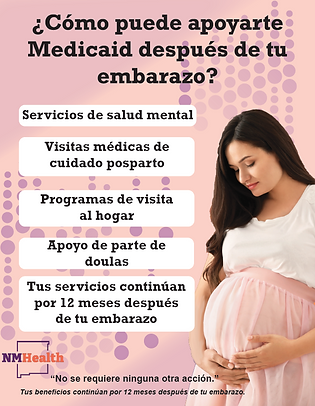
Help us raise awareness about the Postpartum Medicaid Coverage Extension and Maternal Warning Signs! Please share this website and use the flyers below to encourage others to learn about and use this benefit.
Click on the flyers below to download a copy!




Expanding postpartum Medicaid coverage is one way New Mexico is working to improve maternal health and reduce disparities in pregnancy-related outcomes across the state. Ensuring continuous access to care during the first year after birth supports healthier families and stronger communities.